12 Custard Toppings That Add Crunch, Caramel, and Fruit
Good custard already has a lot going for it: silkiness, vanilla or chocolate depth, and that cool, spoonable calm. Toppings are where you wake it up. They can add a crackle of caramel, a tart burst of fruit, or a cloud of meringue. The trick is to choose two or three that contrast without turning the bowl into a messy pile.
Below are twelve reliable toppings, grouped by the job they do, plus notes on texture and pairing. Use them as a starting point, not a rulebook. If you have a dish of chilled vanilla custard and a handful of toasted pistachios, you are already in good shape.
The 12 Toppings at a Glance
- Salted caramel sauce — warm or room temperature, with a pinch of flaky salt.
- Toffee bits or praline — hard, buttery crunch that softens slowly.
- Burnt sugar shards — thin, glassy caramel pieces for a dramatic snap.
- Candied nuts — pecans, almonds, or hazelnuts with a sugary shell.
- Toasted seeds — pumpkin, sesame, or sunflower for a lighter crunch.
- Crushed cookies or shortbread — buttery crumbs that soak up custard.
- Toasted coconut — crisp flakes with a nutty, tropical edge.
- Macerated berries — juicy, tart, and spoonable.
- Roasted stone fruit — peaches, plums, or apricots, soft and caramelized.
- Citrus segments or fruit coulis — bright acidity in spoonfuls or swirls.
- Crisp meringue shards — airy, crunchy, and lightly sweet.
- Torched meringue dollops — soft marshmallow centers with a toasted top.
Caramel and Sugar: Soft, Sticky, Crackly
Caramel is the classic partner for vanilla, chocolate, coffee, and butterscotch custard. A warm sauce over cold custard creates a temperature contrast; a thick room-temperature caramel sits in pools and catches on the spoon. Add flaky salt just before serving so it stays crisp.
For crunch, toffee bits and praline deliver a hard, buttery snap. Burnt sugar shards—cooked to dark amber and poured thin—shatter between your teeth. Keep pieces small. Pair these with chocolate or coffee custard, where bitterness can handle extra sweetness.
Nuts, Seeds, and Crunchy Pantry Bits
Nuts are the easiest texture. Toast them first: a dry skillet over medium heat, shaken often, makes almonds, pistachios, or hazelnuts taste deeper. Candied nuts add sweetness and a glossy shell, good with plain vanilla or egg custard.
Seeds are underrated. Toasted sesame over citrus custard feels delicate; pumpkin seeds bring rustic crunch to maple custard. Crushed shortbread, graham crackers, or gingersnaps act like a deconstructed crust. Add them last minute. Toasted coconut flakes are crisp, lightly sweet, and good with chocolate, mango, or lime custard.
Fruit: Brightness That Cuts Richness
Fruit is the topping to reach for when custard feels heavy. Macerate berries: toss sliced strawberries, raspberries, or blackberries with a spoonful of sugar and a pinch of salt. Let sit 15 minutes. They release a bright syrup that marbles through the custard.
Roasted stone fruit goes softer and deeper. Halve peaches, plums, or apricots, brush with butter, and roast until tender and caramelized at the edges. Citrus segments—orange, blood orange, grapefruit—add clean acidity. A fruit coulis gives the same brightness in a smooth swirl.
Quick pairing note
Berries like vanilla, chocolate, and lemon custard. Roasted peaches love brown sugar and cinnamon. Grapefruit wakes up a flat baked custard.
Meringue, Cream, and Airy Contrasts
Meringue gives two textures in one topping. Crisp meringue shards are baked low and slow until dry, then broken into pieces. They shatter and dissolve quickly, so add them right before serving. Torched meringue dollops are softer: pipe or spoon meringue onto a sheet, bake briefly, then torch the tops. They bring a marshmallow contrast to lemon, chocolate, or coffee custard.
Whipped cream is not one of the twelve, but it belongs in the conversation. A small spoonful softens sharp fruit or bitter caramel. Crème fraîche or lightly sweetened Greek yogurt adds tang. Keep the layer thin so it does not bury the custard.
Pairings That Work
- Vanilla custard: macerated raspberries, crushed pistachios, crisp meringue.
- Chocolate custard: salted caramel, candied hazelnuts, toasted coconut.
- Lemon custard: torched meringue, shortbread crumbs, blueberries.
- Coffee custard: toffee bits, cocoa nibs, whipped cream.
- Coconut custard: mango, lime zest, toasted coconut flakes.
- Brown sugar or maple custard: roasted peaches, candied pecans, pumpkin seeds.
Keep the formula simple: one soft topping, one crunchy topping, and one bright or bitter note. Salted caramel plus toasted almonds plus a few raspberries is a complete bowl. So is lemon custard with meringue shards and a spoonful of berry syrup.
Keep It Crisp: Assembly Tips
Toppings are best added close to serving. Custard is moist, and anything crunchy will soften. If you set out a dessert bar, keep nuts, cookies, meringue, and caramel shards in separate bowls with small spoons. Let guests finish their own bowl. For a sit-down dessert, plate custard first, add fruit or sauce, then finish with crunch.
Temperature matters: cold custard makes warm caramel and roasted fruit feel more dramatic; room-temperature custard is better with cool fruit and whipped cream. If chilling custard ahead, press plastic wrap onto the surface to prevent a skin, then stir before serving. Taste before you pile on toppings. A sweet custard needs tart fruit, bitter cocoa nibs, or toasted nuts. A leaner egg custard can take caramel, meringue, and candied nuts. Start with less; you can always add another spoonful.
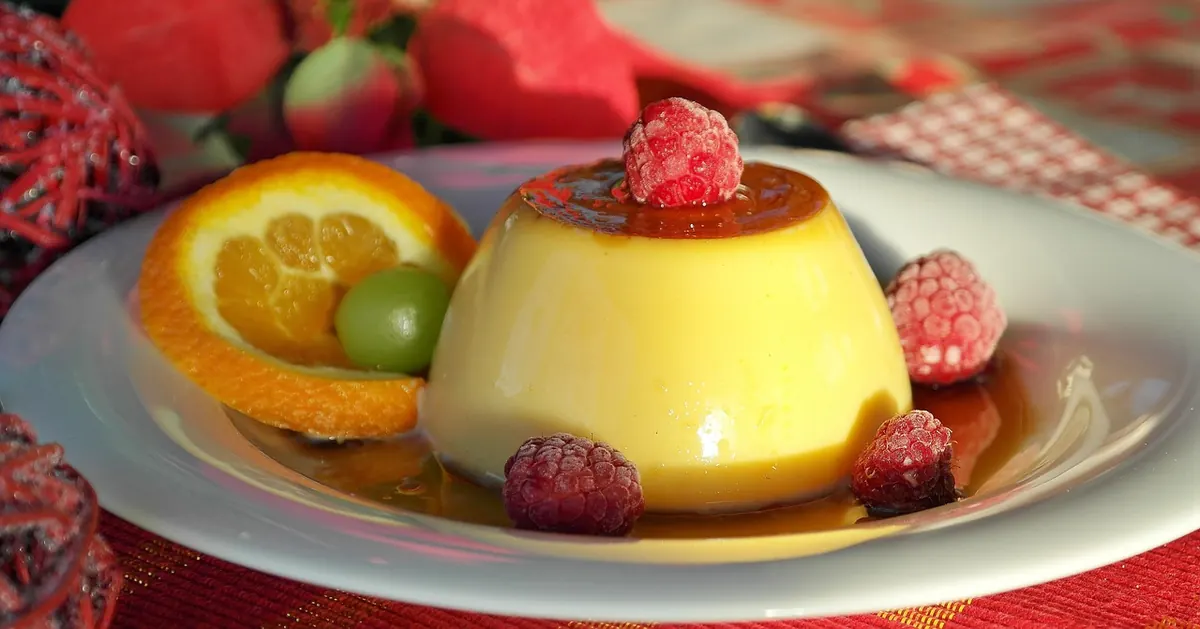
Photo: RitaE / Pixabay
Custard Around the World: Flan, Pasteis de Nata, and Japanese Purin
Flan, pastéis de nata, and Japanese purin share the same ingredients but split into three distinct...
How to Thicken Custard Without Eggs: Cornstarch vs. Gelatin
Cornstarch and gelatin both thicken egg-free custard, but they set in different ways. Compare texture,...
About Us