Custard Around the World: Flan, Pasteis de Nata, and Japanese Purin
Custard travels well. Eggs, milk, sugar, and gentle heat will set into a dessert almost anywhere, which is why the same idea turns up in so many kitchens under a different name. Three versions make the point clearly: the Spanish flan, the Portuguese pastel de nata, and the Japanese purin. They share a family resemblance and almost nothing else.
The Shared Skeleton
Every custard in this group starts the same way. Eggs and dairy go into a bowl, sugar goes in with them, and heat does the rest. What happens after that comes down to four decisions.
- How much egg. Whole eggs set firmly and slice cleanly. Yolks alone give a richer, looser, more liquid set.
- How the heat arrives. A water bath in the oven, a steamer, or a stovetop pan followed by a blast of oven heat.
- How sweet, and how dark. Sugar in the custard, caramel in the mold, or both.
- How it is served. Cold and unmolded, warm and handheld, or chilled in a cup with a spoon.
Change those four and the same ingredients stop tasting like the same dessert.
Spanish Flan: Low Heat and a Water Bath
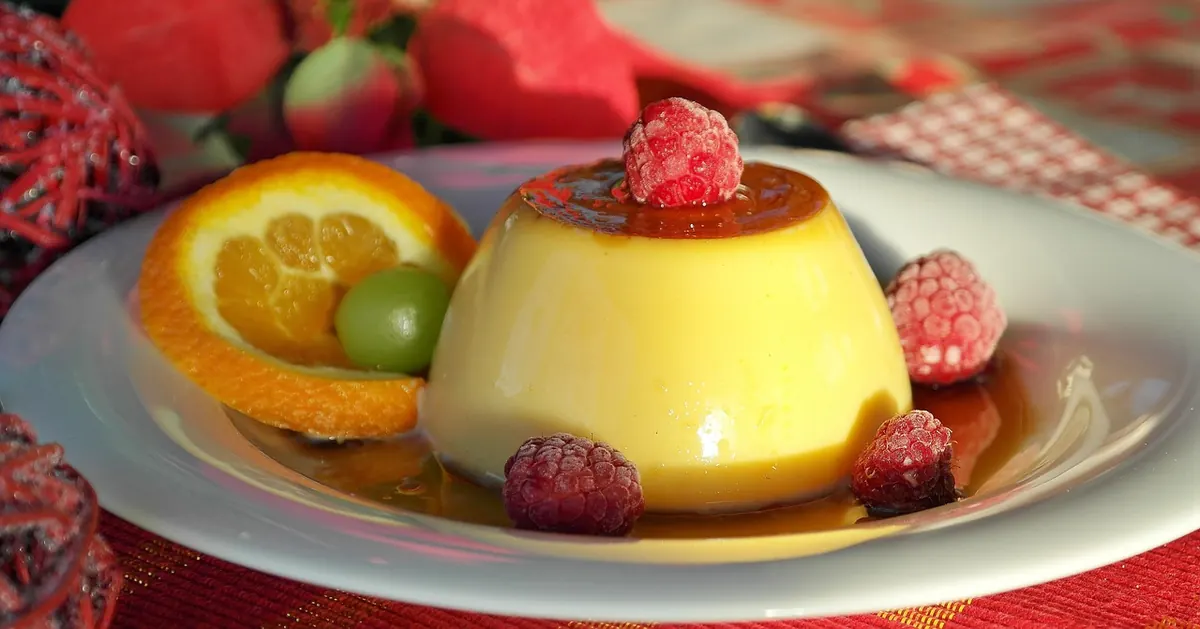
Flan de huevo is the baked custard of Spain, and it is the gentlest of the three. Milk is warmed with a strip of lemon zest and often a cinnamon stick, then left to steep off the heat. Eggs and sugar are whisked just until combined — air is not your friend here — and the warm milk is trickled in slowly so the eggs don't scramble. Strain the mixture before it goes into the mold. It catches stray bits of shell and cooked egg, and it is the difference between a smooth surface and a speckled one.
Why the water bath matters
A bain-marie does one job: it keeps the custard below boiling. Set the mold in a roasting pan, pour hot water halfway up its sides, and bake at roughly 150–160°C (300–325°F). The custard is ready when the outer ring is set and the center still wobbles like a firm jelly. If a knife comes out clean and the whole thing feels solid, you have gone too far. Overbaked flan turns porous and weeps water into the caramel.
Cool it, then refrigerate overnight. Flan needs that time to firm up and for the caramel to melt into a sauce. Unmold by running a thin knife around the edge and inverting onto a plate with a lip — the caramel will run.
The caramel question
Cook sugar to a deep amber, just before it starts to smell sharp. Pale caramel tastes like nothing but sweet; burnt caramel takes over the whole dessert. Pour it into the mold while it's still liquid, tilt to coat the base, and don't worry if it hardens. The custard's moisture will dissolve it again in the fridge.
Some Spanish kitchens add a splash of condensed milk, and in Latin America it is close to standard. The result is sweeter and a little denser. Both are legitimate; the choice is about the texture you want under the spoon.
Pastéis de Nata: Custard Meets a Furnace
Lisbon's answer to the same ingredients is a completely different architecture: a shell of laminated pastry, filled with a custard that is cooked twice.
The custard itself is a stovetop affair — milk, sugar, sometimes a little cream, a generous number of egg yolks, a spoonful of flour or cornstarch, and lemon zest or a cinnamon stick. It is cooked until it coats the back of a spoon, then cooled. This is where home cooks get caught out. The custard thickens considerably as it sits, so pull it off the heat while it still looks a touch loose. If it is stiff in the pan, it will be rubbery in the tart.
The blast of heat
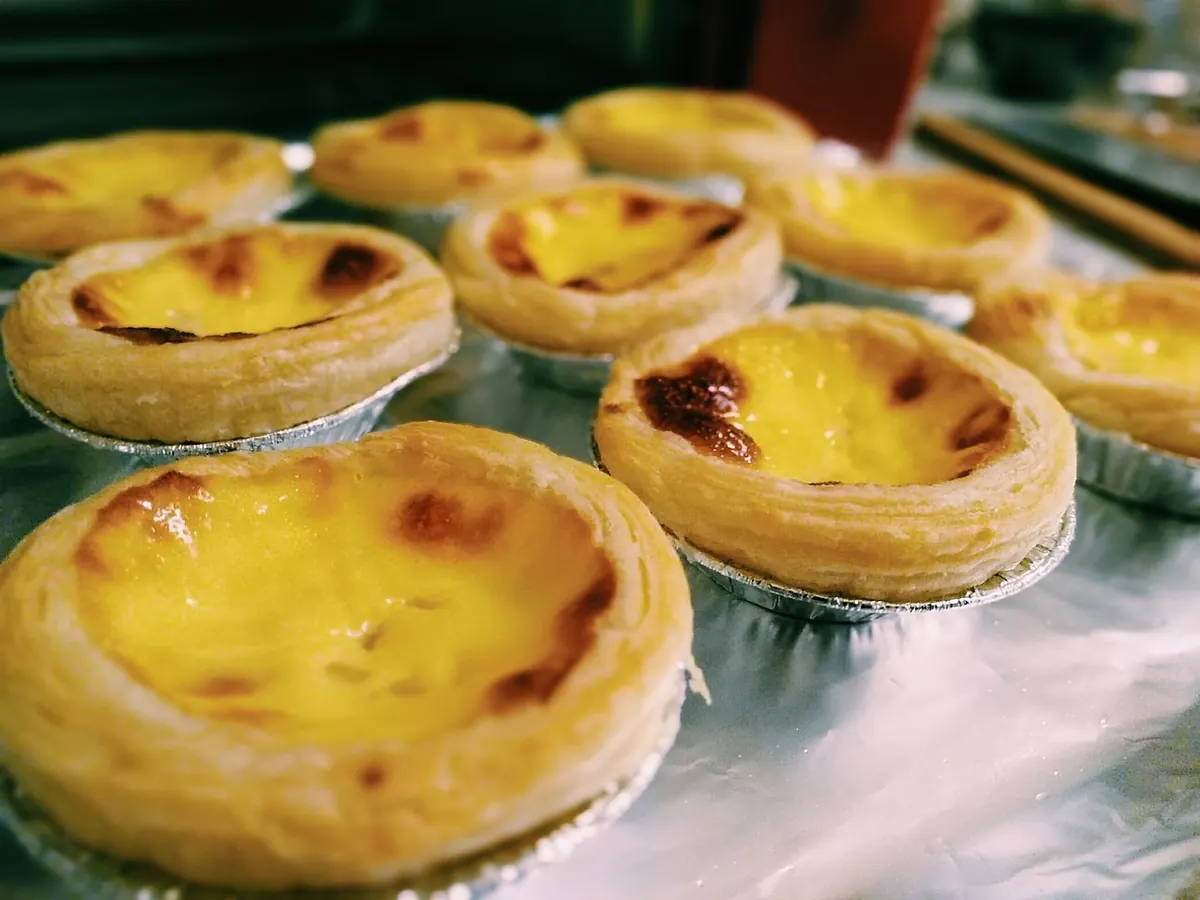
Natas are baked as hot as your oven will go, ideally at 250°C (480°F) or above, near the top. You are not cooking the custard so much as blistering it. Those dark, mottled spots across the surface are the point, not a mistake — they taste faintly bitter and caramelized against the sweet filling.
At home, frozen all-butter puff pastry works well; traditional versions use lard in the dough for a flakier, more savory shell. Chill the custard fully before filling, fill only about three-quarters of the way up, and expect the first tray to look uneven. Serve them warm, the same day, with cinnamon and powdered sugar on the side if you like. Note that "pastéis de Belém" refers specifically to the version sold by one famous Lisbon bakery; the general name for the pastry is pastel de nata.
Japanese Purin: Firmer, Sweeter, and Proudly Jiggly
Purin began as a Western import and became thoroughly Japanese. The base is milk, eggs, sugar, and often a little vanilla, with condensed milk showing up in richer versions. Classic purin is eggier than a delicate French custard, which gives it a clean, quivering set that holds its shape when you turn it out. Softer, pudding-like variations exist, but the firm jiggle is the reference point.
The caramel is where purin makes its own statement. It is usually cooked darker than a Spanish flan's — deliberately a little bitter, to cut through the sweetness of the custard. Some cooks loosen it with a spoonful of water at the end so it pours evenly into the molds. That bitter edge is the whole reason the dessert doesn't cloy.
Steamed or baked
Mushi purin is steamed at low heat, which gives an almost glassy surface. Yaki purin is baked, giving slightly firmer edges and a faintly caramelized top. Steaming is the more forgiving method at home: cover the molds, keep the water at a bare simmer, and check early.
In Japan, purin appears everywhere from convenience store cups to old-style coffee shops, where it arrives on a plate with whipped cream, a cherry, and sometimes a mint leaf. Both ends of that range are worth knowing. The convenience store version is soft and very sweet; the kissaten version is firmer and eaten with a small spoon, slowly.
The Three Side by Side
- Flan: whole eggs, baked in a water bath, caramel in the mold, served cold and sliced.
- Pastel de nata: yolks only, cooked on the stovetop then baked inside pastry at extreme heat, served warm and held in the hand.
- Purin: egg-forward, steamed or baked, caramel cooked darker and slightly bitter, served cold and often topped with cream and fruit.
Rules That Carry Across All Three
- Strain the custard. Every time. It takes thirty seconds and fixes texture you cannot fix later.
- Temperature beats time. Ovens lie, and so do recipe timings. Go by how the custard moves, not by the clock.
- Chill overnight when the recipe allows. Flan and purin both improve noticeably after a night in the fridge.
- Taste your caramel. Put a drop on a cold plate before you commit. Sweet, bitter, and burnt are three different desserts.
- Keep egg custards cold. Cool them quickly, refrigerate promptly, and don't leave them sitting out
Photo: zcf0508 / Pixabay
How to Thicken Custard Without Eggs: Cornstarch vs. Gelatin
Cornstarch and gelatin both thicken egg-free custard, but they set in different ways. Compare texture,...
The History of Custard: From Medieval Puddings to Creme Brulee
Custard began as a spiced medieval pie filling and ended up as crème brûlée. Trace how eggs, milk and...
About Us