How to Make Savory Custard for Quiche: Egg-to-Dairy Ratios and Bake Times
Quiche has a reputation problem, and it comes down to one thing: the custard. A good one is barely set — sliceable at room temperature, trembling faintly in the middle, soft as flan against the tongue. A bad one either bounces or weeps a cloudy puddle onto the plate. The filling is rarely the culprit. What matters is how much egg you use for the dairy, how you season it, and knowing the exact moment to pull the pan from the oven.
The Ratio That Sets Everything Else
Start with one large egg for every 1/2 cup (120 ml) of dairy, measured by volume. That gives you a custard that sets firm enough to cut but stays tender. For a standard 9-inch quiche with a moderate amount of filling, three eggs and 1 1/2 cups of dairy is the sweet spot.
Push past that — say, one egg per 1/3 cup of dairy — and you get something closer to a baked omelet. It slices cleanly but eats dense and slightly rubbery, and it will taste more of egg than of cream. Go the other direction, one egg per 3/4 cup, and the custard may never fully set. It will still be loose in the center after 50 minutes, and the excess liquid invites a soggy crust.
Why the Middle Range Wins
Egg proteins coagulate and form the web that holds the dairy in place. Too few proteins and the web is too weak to trap the liquid. Too many and the web tightens, squeezing out moisture — that's the water you sometimes see pooling around a slice. The 1:2 ratio leaves just enough slack in the structure.
Yolks for Richness, Whites for Structure
Once you're comfortable with the base ratio, you can nudge the texture. Swapping one whole egg for two yolks gives a noticeably silkier, more custardy set — good for a quiche you plan to serve warm rather than chilled. Adding an extra white, on the other hand, firms things up and helps if your filling is heavy or wet. Keep the total volume of the custard roughly the same either way.
Choosing Your Dairy
Fat carries flavor and buffers the custard against curdling, so a blend beats either extreme. A reliable mix is half whole milk and half heavy cream. All cream makes a heavy quiche that coats the mouth; all skim milk gives a thin, watery result and a custard prone to breaking. If you want a shortcut, half-and-half sits right in the middle and works well with three eggs.
Bring the dairy to room temperature before mixing if you can. Cold custard poured into a cold shell takes longer to bake, which means more time for the crust to over-brown before the center sets.
Seasoning the Custard
Under-seasoned custard tastes flat no matter how good the filling is. As a starting point, use about 1/2 teaspoon of kosher salt (or a scant 1/4 teaspoon of fine table salt) per 1 1/2 cups of custard. If you're adding salty cheese, bacon, or olives, cut that back by half and adjust after tasting.
Beyond salt, a few grates of nutmeg are traditional for a reason — they read as richness rather than spice. White pepper keeps the custard clean-looking. A teaspoon of Dijon mustard, a tablespoon of chopped herbs, or a splash of cream sherry all work well; just don't add watery ingredients like fresh tomato or raw onion without cooking the moisture out first.
To check your seasoning safely, spoon a small amount of the raw mixture into a microwave-safe dish and cook it in short bursts until fully set, then taste that. It won't taste exactly like the finished quiche, but it will tell you whether you're in the right range.
Building the Custard, Start to Pour
- Whisk the eggs gently. Break them up and stir just until the yolks and whites are uniform. Vigorous whisking whips in air, and air puffs the custard in the oven before it collapses into a spongy texture.
- Add the dairy in two additions. Pour half in, stir to combine, then the rest. This blends more evenly than dumping everything at once.
- Season and stir again. Add salt, pepper, nutmeg, and any liquid flavorings now.
- Strain the mixture. Pour it through a fine-mesh sieve into a jug. This catches the tough chalazae and any stray bits of egg, and it's the single easiest upgrade to a smoother custard.
- Rest it for 15 to 30 minutes. The foam on top subsides and the proteins relax. Skim off any bubbles before pouring.
- Fill the par-baked shell. Place the shell on a rimmed baking sheet, scatter in your cooked, well-drained filling, then pour the custard over. Stop about 1/4 inch below the rim so it can expand.
Bake Times and Doneness Cues
Bake at 325°F to 350°F (160°C to 175°C) on the middle rack, with the sheet pan underneath to catch drips and insulate the bottom crust. A 9-inch quiche with 1 1/2 cups of custard typically needs 35 to 45 minutes, but time is only a rough guide. What you're watching for is the set.
At the 30-minute mark, give the pan a gentle nudge. The outer two inches should look firm and slightly puffed; the center should still wobble as one piece, like gelatin. If the whole surface ripples like liquid, it needs more time. If the center has cracked or the edges have pulled away from the crust, you've gone too far.
The Temperature Check
An instant-read thermometer is the most reliable test. Insert it into the center — you're aiming for 170°F to 175°F (77°C to 79°C). Below that, the custard will be loose. Much above 180°F and the proteins tighten and squeeze out water, which is why an overbaked quiche leaks.
Pull the quiche when it's still slightly underdone by appearance. Residual heat finishes the job as it cools. Let it sit for at least 20 minutes, ideally 30, before slicing; the custard continues to firm as it sets up, and cutting early gives you a runny wedge.
When Things Go Wrong
- Watery center or puddle under the slice: Overbaked, or the filling was wet. Squeeze cooked spinach dry, sauté mushrooms until their liquid evaporates, and blot any vegetables before adding.
- Rubbery texture: Too many eggs for the amount of dairy, or baked too long at too high a temperature.
- Soggy bottom crust: The shell wasn't par-baked enough. Blind-bake it until the surface is dry and just starting to color, and brush it with a little beaten egg or mustard while hot to seal it.
- Cracks across the top: Usually a fast oven or an over-set custard. Lower the temperature next time and check earlier.
- Pale, bland flavor: Not enough salt. Season the custard itself, not just the fillings.
Cover the crust edges with foil or a shield once they're golden, usually around 25 minutes in, so the custard can finish without the rim burning.
The Ratios to Keep Handy
For a 9-inch quiche: three large eggs, 1 1/2 cups dairy (half milk, half cream), 1/2 teaspoon kosher salt, a few grates of nutmeg, baked at 350°F for 35 to 45 minutes until the center reaches 170°F and jiggles as one unit. Scale from there — four eggs and 2 cups dairy for a deep 10-inch pan, two eggs and 1 cup for a small tart.
Write the ratio on a card and tape it inside a cabinet. Once you've made it three or four times, you'll stop measuring the doneness and start reading it: the wobble, the smell of toasted custard, the way the surface loses its wet sheen. That's the point where quiche stops being a gamble and becomes something you can throw together on a Sunday morning without thinking about it. Refrigerate leftovers within two hours and eat them within three or four days, reheating gently so the custard doesn't toughen.
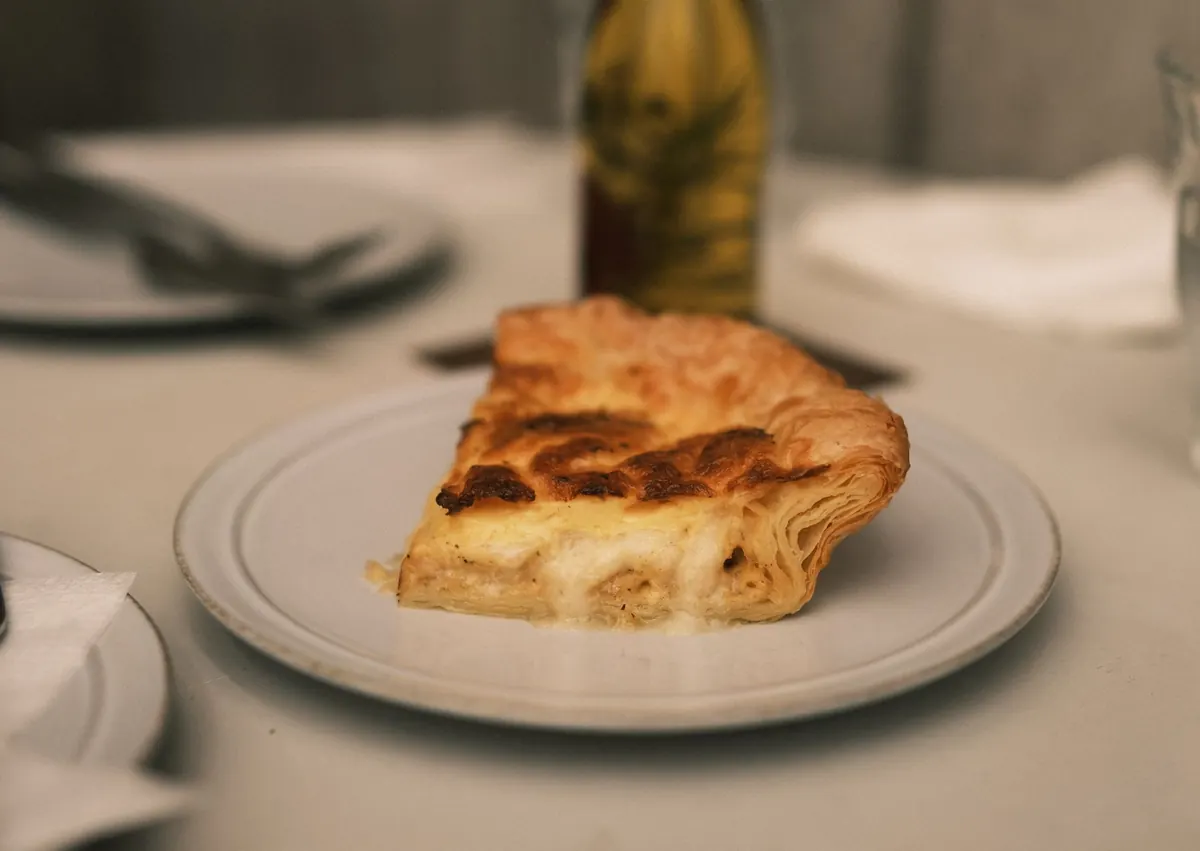
Photo: Gu Ko / Pexels
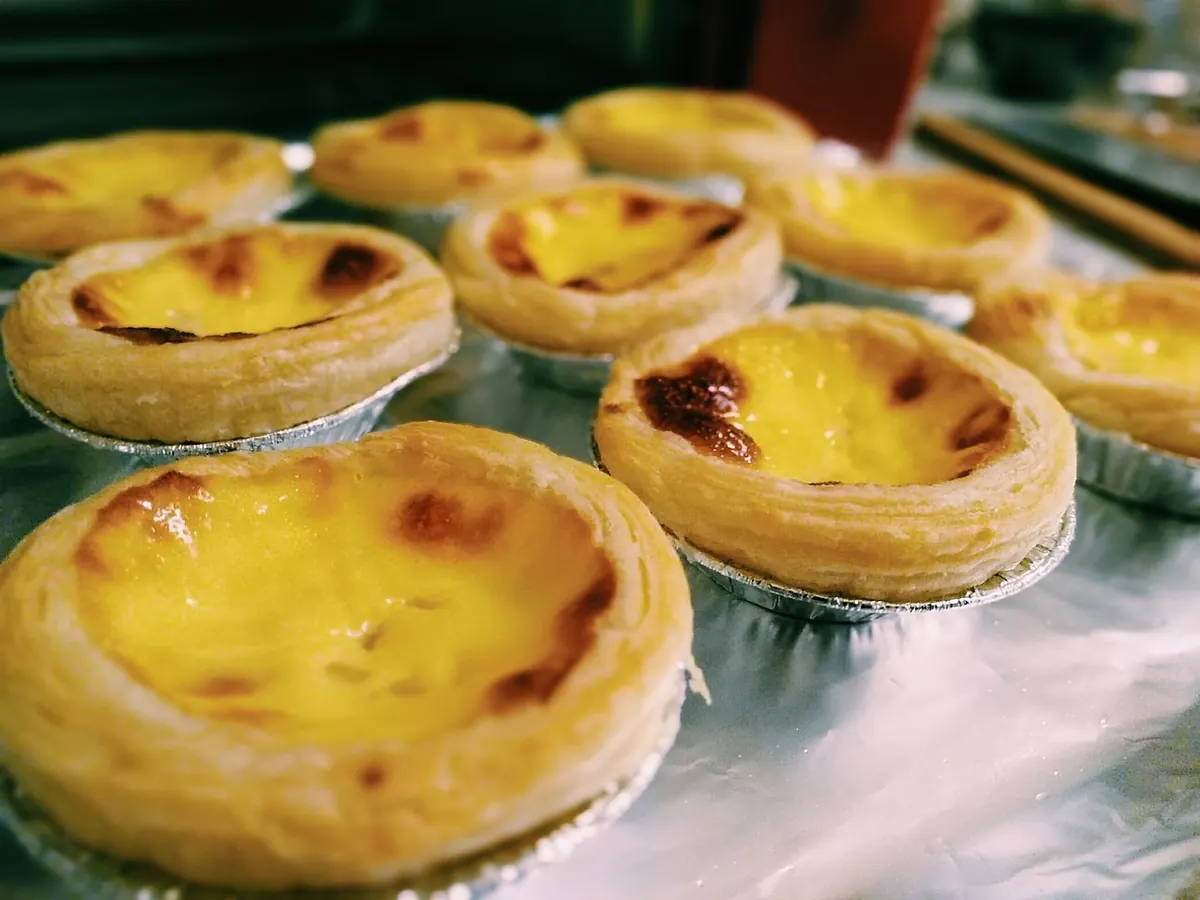
Custard Around the World: Flan, Pasteis de Nata, and Japanese Purin
Flan, pastéis de nata, and Japanese purin share the same ingredients but split into three distinct...
How to Thicken Custard Without Eggs: Cornstarch vs. Gelatin
Cornstarch and gelatin both thicken egg-free custard, but they set in different ways. Compare texture,...
About Us