Spring Rhubarb Custard Tart: A Seasonal Recipe with Balanced Sweetness
A rhubarb tart is a small test of nerve. The stalks are sour enough to make you wince, and they release a startling amount of pink water the moment they meet heat. Both problems solve themselves once you pour custard around them: the eggs and cream soften the acidity, and the rhubarb's juice becomes the flavour of the whole tart instead of a puddle under the pastry. The only real work is building in enough protection that the crust stays crisp.
Why rhubarb and custard belong together
Eaten raw, rhubarb is bracing to the point of unpleasant. Baked under a blanket of sweetened cream and egg, it turns tender and jewel-coloured, and its acidity cuts through the richness that would otherwise make a custard tart cloying after three bites. That's the balance this recipe is chasing: sharp fruit, restrained sweetness, and a custard that tastes of vanilla and cream rather than sugar.
You also get three textures in one slice — brittle, biscuity pastry, a soft set custard, and soft-but-not-mushy fruit. Getting all three right is mostly a matter of temperature and timing, not skill.
Choosing and prepping rhubarb
Forced rhubarb, the slender pink stuff that appears in late winter, is tender, mild and bakes quickly. Field rhubarb, which follows in spring, is thicker, greener and more assertive. Either works here. Look for firm stalks that snap rather than bend; if the cut end looks dry and fibrous, it will stay stringy in the oven.
Trim and discard the leaves — they aren't edible — then cut the stalks into pieces about 4 cm long. Thick stalks benefit from a light peel with a vegetable peeler; anything pencil-thin doesn't need it.
Macerate, then drain
Toss 500 g of rhubarb with 40 g caster sugar and the finely grated zest of one orange. Leave it in a bowl for 30 minutes. The sugar will pull out a surprising amount of liquid, and that liquid is your enemy if it ends up in the tart shell. Tip the rhubarb into a colander set over a saucepan, let it drain thoroughly, and pat the pieces dry on kitchen paper. Simmer the collected juice down to a few tablespoons of syrup and brush it over the tart after baking — it gives a glossy finish and concentrates the fruit flavour.
Pastry and the soggy-crust problem
Custard tarts fail at the bottom before they fail anywhere else. A shortcrust that would be perfectly baked for a fruit pie will go soft under a liquid filling, so the crust here is baked harder and darker than feels comfortable.
- Blind bake properly. Line a 23 cm tart tin, chill the shell for 20 minutes, then bake at 190°C (170°C fan) with parchment and baking beans for 20 minutes. Remove the beans and bake another 8 to 10 minutes, until the base is an even biscuit gold. Pale pastry is underbaked pastry.
- Seal the surface. Brush the hot shell with lightly beaten egg white and return it to the oven for two minutes. The protein sets into a thin, invisible barrier.
- Use a metal tin. Metal conducts heat into the base far better than ceramic or glass.
- Bake on a preheated tray. Slide the tin onto a baking sheet that has been warming in the oven; the immediate blast of heat sets the bottom crust fast.
- Don't overfill. A custard that rises above the pastry rim will spill, soak the edges, and glue the tart to the tin.
For the pastry itself: rub 150 g cold butter into 250 g plain flour with 50 g icing sugar and a pinch of salt, then bind with one egg yolk and a tablespoon or two of ice-cold water. Rest it flat in the fridge for at least 30 minutes before rolling.
The custard, kept simple
Whisk 3 large eggs with 70 g caster sugar, a pinch of salt and a teaspoon of vanilla until the sugar dissolves. Add 300 ml double cream and 100 ml whole milk, whisking gently — you want a smooth liquid, not foam, so skim off any bubbles. Straining the mixture through a fine sieve catches stray bits of egg and gives a silkier set. If you like a slightly firmer slice that cuts cleanly, whisk in a tablespoon of cornflour.
Keep the custard lightly sweet. Seventy grams is deliberately modest; the rhubarb syrup and a dusting of icing sugar at the table can add more, but you can't take sugar out once it's baked.
Assembly and baking
- Scatter the drained rhubarb over the warm, sealed pastry shell in a single layer, cut sides up.
- Pour the custard around and over the fruit, stopping a few millimetres below the rim.
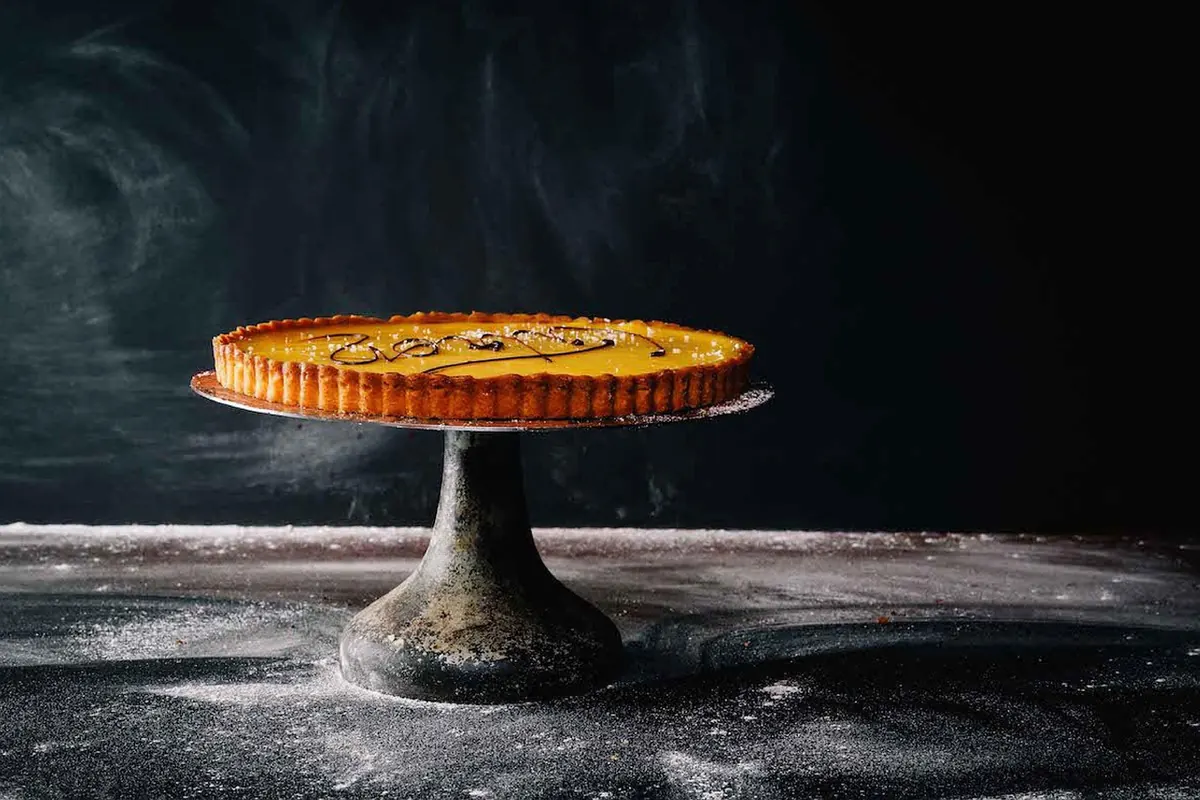
- Bake at 180°C (160°C fan) for 35 to 45 minutes. The tart is ready when the edges are set and the centre still wobbles as one piece when you nudge the tin.
- Cool completely on a rack, then brush with the reduced rhubarb syrup.
A wobbling centre is correct. A centre that sloshes is not; give it five more minutes and check again. Overbaking shows up as a cracked, grainy surface within minutes of leaving the oven.
If something goes wrong
- Watery filling: the rhubarb wasn't drained long enough, or the custard was underbaked. Next time, drain for a full 30 minutes.
- Cracked top: usually too much heat or too long in the oven. Bake lower and slower, and cool the tart away from draughts.
- Rhubarb floating: pieces cut too small rise to the surface. Keep them chunky and dry them well.
- Stuck tart: custard leaked between shell and tin. Run a thin knife around the edge while the tart is still just warm.
Serving, storing, and the last slice
This tart tastes best an hour or two out of the oven, when the custard is set but still soft — barely warm or at room temperature. Straight from the fridge it goes dense and muted, so if you've chilled it, let it sit out for half an hour before serving. A spoonful of crème fraîche or unsweetened whipped cream alongside is the right move; more sugar isn't.
Refrigerate leftovers, loosely covered, once the tart has cooled, and eat within three days. It doesn't freeze well — the custard turns watery on thawing. For a variation, swap the orange zest for a scrape of vanilla bean in the fruit, or add a handful of halved strawberries to the rhubarb for a softer, sweeter spring version.
Photo: Tahir Xəlfəquliyev / Pexels
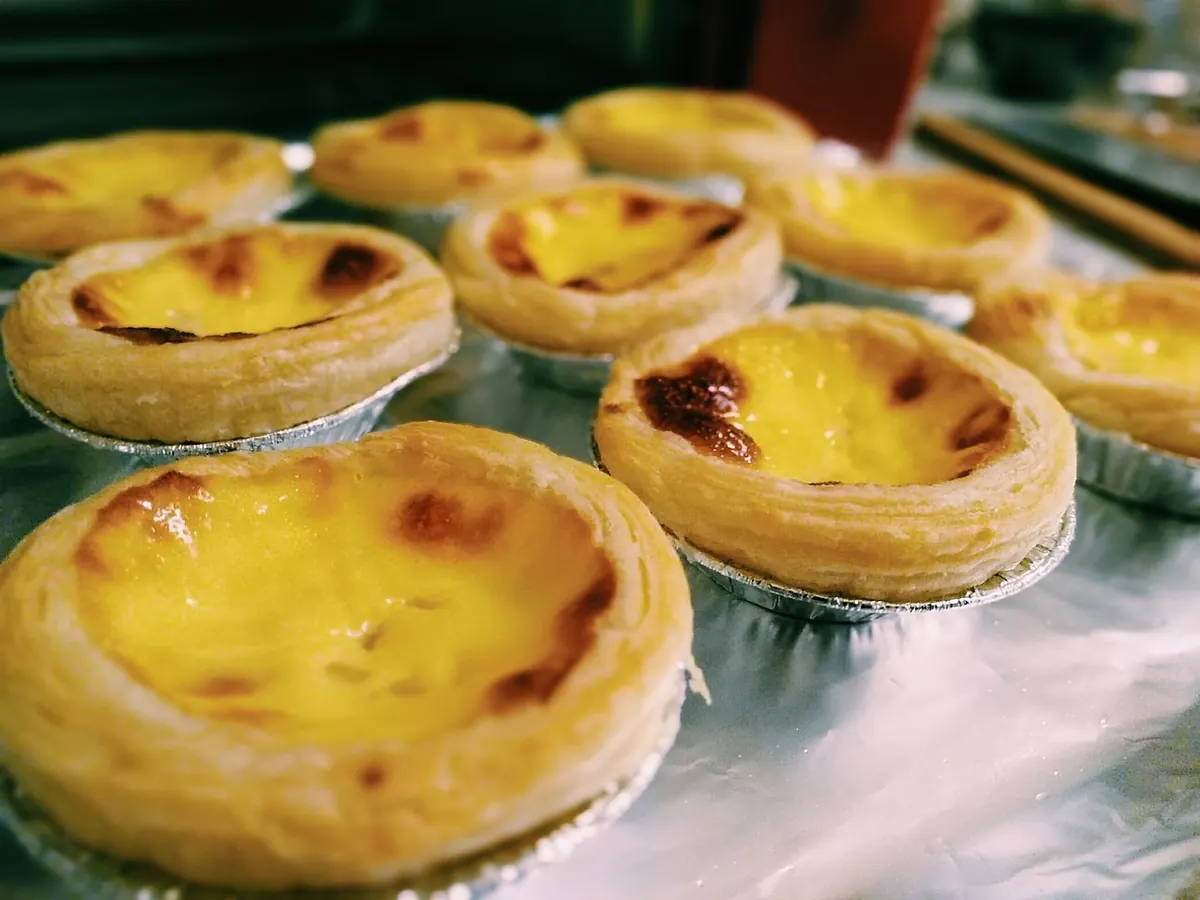
Custard Around the World: Flan, Pasteis de Nata, and Japanese Purin
Flan, pastéis de nata, and Japanese purin share the same ingredients but split into three distinct...
How to Thicken Custard Without Eggs: Cornstarch vs. Gelatin
Cornstarch and gelatin both thicken egg-free custard, but they set in different ways. Compare texture,...
About Us