How to Make Stirred Custard from Scratch Without Curdling
Stirred custard is the pourable kind: milk, sugar, eggs, and a little patience, cooked on the stovetop until it thickens into a smooth sauce you can spoon over berries, cake, or warm fruit. It's also the starting point for ice cream bases and a long list of desserts that taste expensive but cost very little.
The trouble is that the distance between silky custard and scrambled eggs is about thirty seconds. Most curdled custards fail for one of two reasons: the eggs met heat too fast, or the pan stayed on the flame a moment too long. Both are habits you can fix in an afternoon.
What follows is the whole method, plus the small adjustments that separate a custard you can pour from one you have to strain — and a rescue plan for the moment you realize you've pushed it too far.
What Stirred Custard Is, and Why It Curdles
A stirred custard — custard sauce, or crème anglaise if you're feeling French — thickens over heat while you stir it. Nothing sets it into a shape. A baked custard, by contrast, sets in a water bath in the oven and gets sliced. Same ingredients, different destination.
What's happening in the pan is protein coagulation. Egg yolks are full of proteins that uncurl as they warm and then link up, thickening the liquid around them. They begin to thicken somewhere in the 150s Fahrenheit and firm up fast near 180. That's a narrow window, and it's why custard rewards attention more than instinct.
Sugar is what makes that window survivable. Dissolved sugar gets between the egg proteins and slows their race toward each other, which is why a sweeter custard can take more heat before it turns. It also raises the temperature at which the mixture thickens, so a sugary custard feels slower to come together. That's not a problem; it's a cushion.
Fat does something similar. Whole milk and cream coat the proteins and keep them from tangling too aggressively. Skim milk works, but it gives you less margin for error. If you're new to this, start with whole milk or a milk-and-cream blend.
Where the Danger Actually Lives
- Below 140 F: almost nothing is happening. Keep stirring and be patient.
- 150–160 F: the custard begins to thicken and will coat the back of a spoon. This is your target.
- 170 F: it looks done, and it is — but it's also one distracted minute from trouble.
- 180 F and up: proteins over-link and squeeze out water. That watery, grainy result is a curdled custard.
An instant-read thermometer is cheap insurance for your first few batches. After that, you'll learn to read the spoon and the surface, and you'll rarely need it.
The Ingredients and What Each One Does
You need five things, and you probably have all of them.
- Egg yolks. The thickening agent. Four yolks will set about two cups of liquid into a pourable sauce; more yolks mean a richer, thicker custard that's closer to something you could pipe. Save the whites for meringues or an omelet.
- Sugar. Sweetness, but also insurance against curdling. Whisk it into the yolks before any heat arrives.
- Milk or cream, or both. The body of the custard. A 50/50 mix of whole milk and heavy cream gives you classic crème anglaise richness without being heavy.
- A pinch of salt. It doesn't make custard salty; it makes everything else taste like more.
- Vanilla or another flavoring. A split vanilla bean steeped in the warm milk is the old-fashioned route. Extract stirred in at the end is the practical one.
How to Make Stirred Custard, Step by Step
- Warm the dairy gently. Pour the milk and cream into a heavy saucepan and heat over medium-low until steam rises and small bubbles ring the edge. Don't boil it. If you're infusing vanilla bean or citrus zest, add it now, take the pan off the heat, and let it steep for ten minutes.
- Whisk the yolks and sugar until pale. In a bowl, whisk the yolks with the sugar for a full minute, until the color lightens and the mixture falls from the whisk in a ribbon. This step isn't decoration — the sugar needs to dissolve fully so it can do its protective work.
- Temper the eggs. This is the step everyone rushes and everyone regrets. While whisking the yolks constantly, dribble in a ladleful of the warm milk. Then another. Then another. You're raising the egg temperature slowly, a few degrees at a time, instead of shocking it. Add at least a third of the hot liquid this way.
- Return everything to the pan. Pour the tempered egg mixture back in with the remaining milk, whisking as you go. Set the pan over medium-low heat.
- Stir constantly with a wooden spoon or spatula. Not a whisk — a whisk whips in air and makes foam that hides the moment of thickening. Keep the spoon moving across the bottom and into the corners, where heat pools and custard catches.
- Pull it early. The moment the custard coats the spoon and holds a clean line when you draw a finger through it, off the heat. Strain it into a bowl, stir in the vanilla and salt, and let it cool slightly before serving.
- Cool it fast if you're storing it. Set the bowl in an ice bath and stir occasionally until it's lukewarm, then cover with plastic pressed to the surface and refrigerate.
How to Tell When It's Done
You don't need a thermometer if you know what to look for. There are three reliable signals, and they tend to arrive within a minute of one another.
- The spoon test. Dip a spoon in, pull it out, and swipe your finger across the back. If the custard holds a clean, sharp-edged line, it's ready.
- The coat test. The custard should cling to the spoon in a thin, even film rather than running off like milk.
- The faint bubble. One or two lazy bubbles surfacing at the edge mean you're at the border of the window too. Take it off now.
When in doubt, take the pan off the heat. A custard that's a shade underdone will thicken as it cools. A custard that has gone too far can't be walked back — only strained and apologized for.
If It Starts to Curdle, Act Fast
Curdling rarely happens all at once. It announces itself: the custard goes slightly grainy against the spoon, or you catch a whiff of scrambled egg. If you notice it early, you can often save the batch.
- Kill the heat immediately. Move the pan off the burner, not just to a different one.
- Keep stirring. Sometimes the curds are small enough to smooth out as the mixture cools below the danger zone.
- Shock it cold. Set the pan, or a bowl of the custard, into an ice bath and stir until it drops below 150 F.
- Strain it. Pour through a fine-mesh sieve into a clean bowl, pressing gently with a spatula. Small curds will be left behind and the sauce underneath will still be silky.
If it's fully scrambled, strain it anyway and use the result as a light sauce over something sturdy, or stir it into your coffee. Then try again with a lower flame and a heavier hand on the stirring. It's a skill, and the second batch is almost always better than the first.
Common Mistakes Worth Avoiding
- Cold eggs into hot milk. Let the yolks sit out for twenty minutes, or at least whisk them with the sugar until they've lost their chill. Cold yolks curdle faster.
- Boiling. A custard should never simmer. If you see the surface shuddering, the heat is too high.
- Walking away. The whole cook takes six to ten minutes. The last two are the ones that matter. Stand there.
- Using a thin pan. Aluminum or lightweight steel creates hot spots that scorch and curdle. A heavy-bottomed saucepan spreads the heat.
- Adding flavoring too early. Acidic additions like lemon juice or wine push proteins toward curdling. Add them off the heat, at the end.
Variations and How to Use It
Once you can make a plain custard, you can make almost anything. Steep the milk with a split vanilla bean, a strip of orange peel, a few cracked cardamom pods, or a handful of fresh mint. Swap a quarter cup of the milk for strong espresso and you have a coffee custard. Use brown sugar or honey in place of white for a deeper flavor, though both will darken the color.
Serve it warm or cold over berries, poached pears, sliced bananas, bread pudding, or a plain slice of cake that could use some company. Fold it into whipped cream for a quick mousse, or churn it as the base of a custard-style ice cream. A few spoonfuls stirred into a bowl of oatmeal is a small, unreasonable pleasure.
Stored in the refrigerator with plastic pressed directly onto the surface, it keeps for three days. Reheat gently over low heat, stirring, or thin it with a splash of milk if it has firmed up. It will not survive a microwave on high, and it will not survive freezing without splitting.
Make it once with a thermometer and a timer, then make it again without either. Custard is one of those things that seems fussy right up until the day it becomes instinct.
Photo: SHVETS production / Pexels
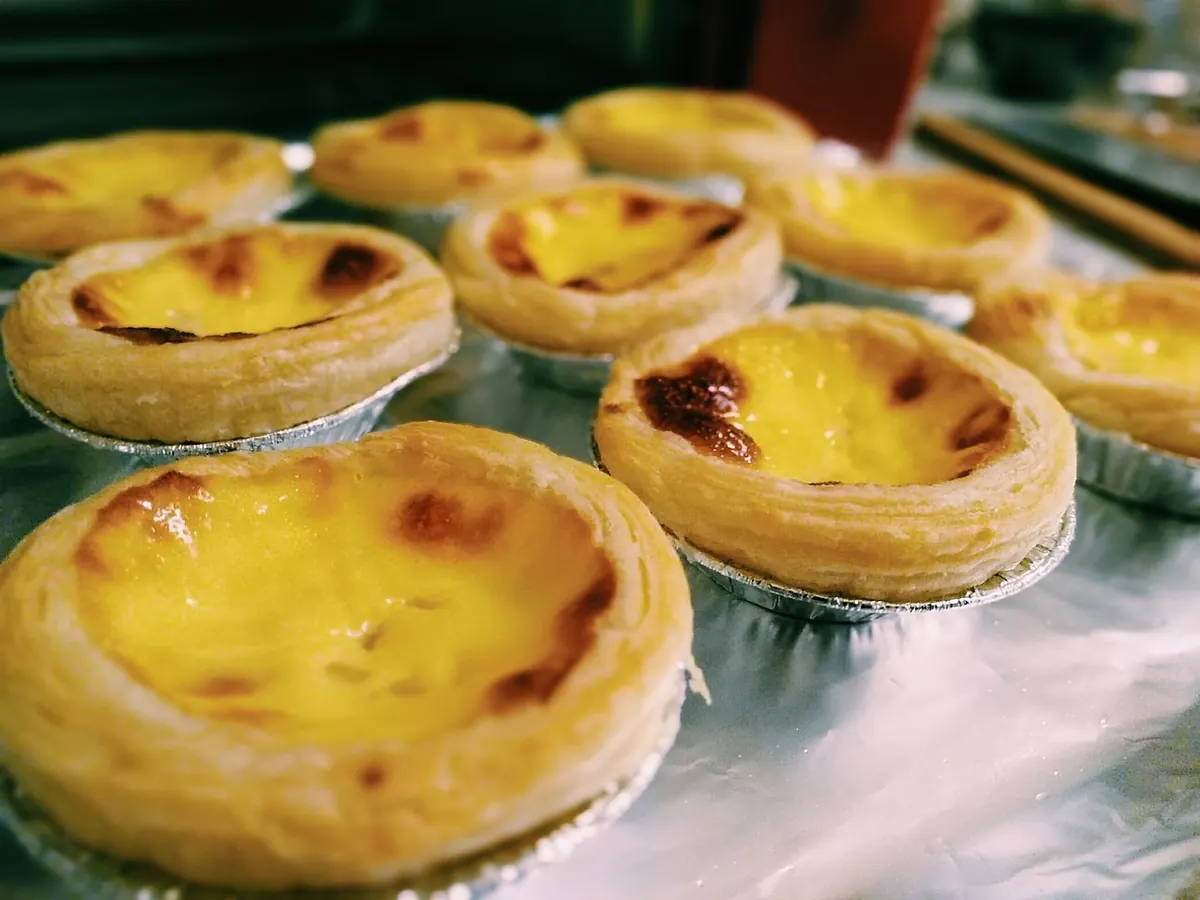
Custard Around the World: Flan, Pasteis de Nata, and Japanese Purin
Flan, pastéis de nata, and Japanese purin share the same ingredients but split into three distinct...
How to Thicken Custard Without Eggs: Cornstarch vs. Gelatin
Cornstarch and gelatin both thicken egg-free custard, but they set in different ways. Compare texture,...
About Us